
This page highlights research projects associated with the Plant Heat Resilience for Adaptation, Mechanisms & Ecology (PHRAME) hub. Current work focuses on understanding how thermophilic plants maintain growth and photosynthetic performance under extreme heat through integrated physiological, molecular, and genomic approaches. As the hub develops, additional projects will expand this growing body of research on plant thermotolerance and heat resilience.
Thermal Acclimation in Tidestromia oblongifolia
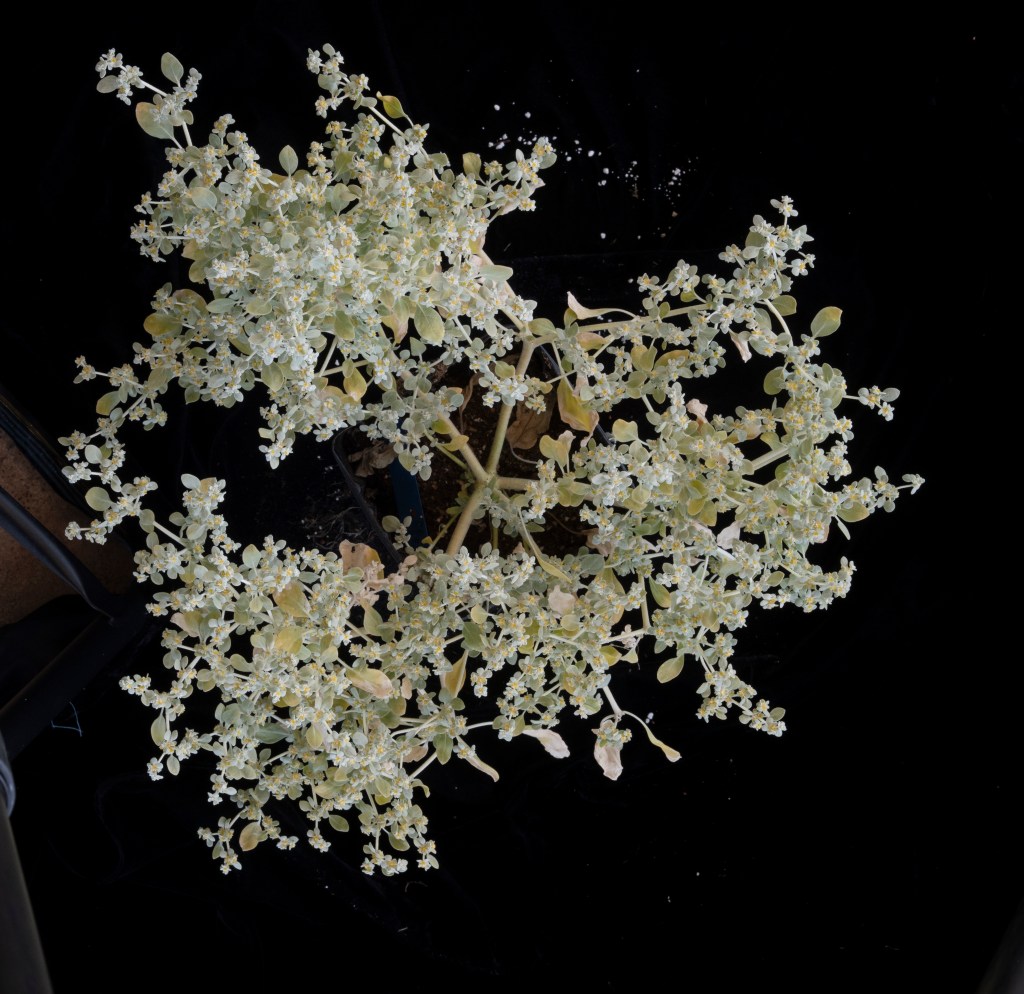
This project examines how the desert plant Tidestromia oblongifolia survives and grows under the extreme summer temperatures of Death Valley. Experiments replicating Death Valley summer conditions revealed that the plant rapidly acclimates to high temperatures, increasing its optimal temperature for photosynthesis while maintaining strong growth and carbon assimilation. These physiological responses are accompanied by coordinated changes in cellular structure and gene expression, including the reorganization of chloroplasts and mitochondria and widespread transcriptional responses to heat.

By integrating physiological measurements with genomic and transcriptomic analyses, this research aims to identify the biological mechanisms that enable T. oblongifolia to maintain photosynthetic performance under temperatures that inhibit most plants. These findings provide insight into the processes underlying plant thermotolerance and highlight potential mechanisms that may inform future efforts to improve heat resilience in crops.
Related Publication(s)
Prado, K., Xue, B., Johnson, J. E., Stata, M., Hawkins, C., Feehan, J., Rivera-Zuluaga, K., Cheng, S., Liu, H., Cousins, A. B., Schrader, H., Kirchhoff, H., De Angelis, A., Noel, J. P., Re, R., Andrade, L., Kambhampati, S., Pacheco, J., Hotto, A. M., & Stern, D. B. (2025). Photosynthetic acclimation is a key contributor to exponential growth of a desert plant in Death Valley summer. Current Biology, 35(22), 5502–5520.e11. https://doi.org/10.1016/j.cub.2025.08.021