
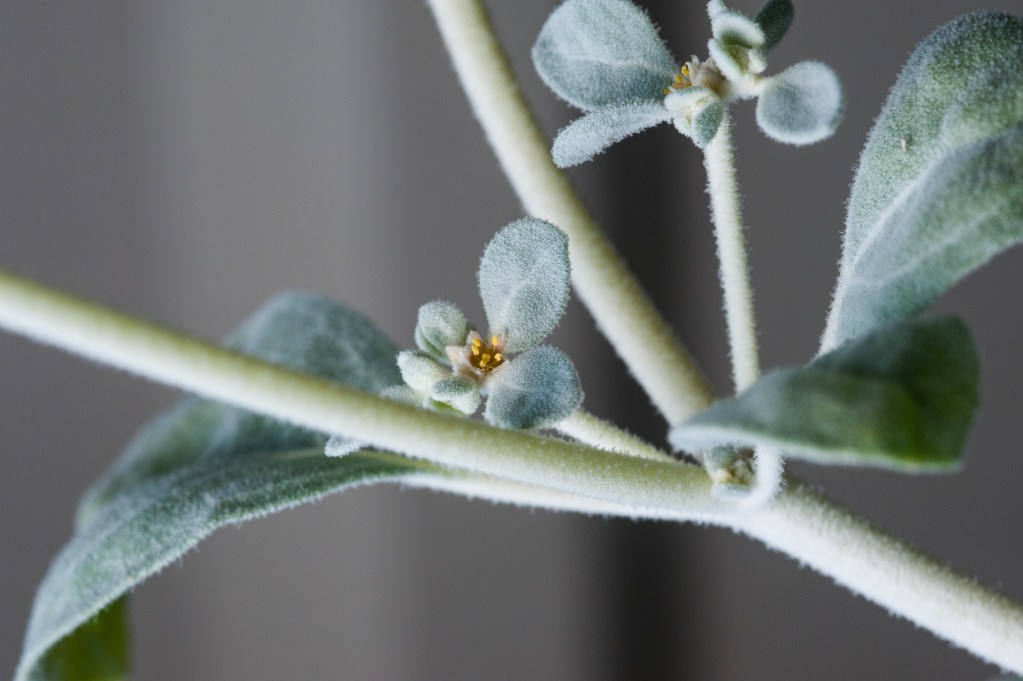
Thermophilic plants that naturally thrive under extreme heat provide valuable systems for studying the biological mechanisms that enable plant survival and function at high temperatures. Species featured here are known for their ability to maintain growth and photosynthetic performance under conditions that inhibit most plants. Each profile highlights key information about habitat, physiology, thermal tolerance, molecular characteristics, and related research resources. The database begins with Tidestromia oblongifolia, with additional thermophilic species, desert plants, and heat-tolerant crop relatives to be added as the hub expands.
Featured Species: Tidestromia oblongifolia

Tidestromia oblongifolia is a desert-adapted C4 plant in the Amaranth family native to Death Valley and other arid regions of the southwestern United States. This species has attracted scientific interest because of its ability to grow rapidly and maintain strong photosynthetic performance under the extreme summer temperatures of Death Valley, where daytime temperatures can exceed 45 °C.
Recent research has shown that T. oblongifolia rapidly acclimates to high temperatures by adjusting its photosynthetic thermal optimum within days. Under heat stress, the plant maintains carbon assimilation while undergoing coordinated changes across multiple levels of biological organization. These responses include alterations in cellular ultrastructure, particularly changes in chloroplast and mitochondrial organization, as well as widespread shifts in gene expression associated with heat acclimation. Together, these adjustments enable the plant to sustain photosynthesis and accumulate biomass under conditions that inhibit most plant species.
Because of these characteristics, T. oblongifolia provides a powerful system for studying the mechanisms underlying plant thermotolerance. Insights from this species may help reveal how plants maintain photosynthetic function and growth under extreme heat, informing broader efforts to understand and potentially improve heat resilience in crops.
Key characteristics
- Desert C4 species native to Death Valley
- Maintains strong photosynthetic performance above 45 °C
- Rapid acclimation of photosynthetic thermal optima
- Distinctive chloroplast and mitochondrial structural changes under heat
- Coordinated transcriptional responses associated with heat acclimation
- High growth rates and biomass accumulation under extreme temperatures
Related Publications
Prado, K., Xue, B., Johnson, J. E., Stata, M., Hawkins, C., Feehan, J., Rivera-Zuluaga, K., Cheng, S., Liu, H., Cousins, A. B., Schrader, H., Kirchhoff, H., De Angelis, A., Noel, J. P., Re, R., Andrade, L., Kambhampati, S., Pacheco, J., Hotto, A. M., & Stern, D. B. (2025). Photosynthetic acclimation is a key contributor to exponential growth of a desert plant in Death Valley summer. Current Biology, 35(22), 5502–5520.e11. https://doi.org/10.1016/j.cub.2025.08.021